The Warren Forest Garden is our 2.5 acre permaculture homestead on Scotland’s Black Isle. It’s a carefully designed mosaic of forest gardens, meadows, productive growing areas, mixed woodland, eco buildings and our retrofitted house.
We use organic, no dig methods to build healthy soil and create abundance, while supporting biodiversity with wildlife ponds, a bog garden, and a tapestry of wildflowers that feed pollinators through every season.




Our land is shaped by permaculture, an ecological design framework for living in balance with nature. Everything has a purpose—from scythed meadows and compost systems to nitrogen fixing trees and dynamic accumulators. We favour slow, regenerative approaches: mulching instead of digging, harvesting grass for compost, coppicing woodland, and making use of plants like nettles as valuable resources.
By observing natural systems and designing with intention, we are gradually creating a self sustaining ecosystem that provides food, fuel, materials, beauty and habitat. Our vision is a resilient, multifunctional landscape that nurtures wildlife and supports the human community living within it.
The Warren Forest Garden a place for low impact living, creative work, and quiet connection with the land.

BROADBRUSH DESIGN OF THE WARREN FOREST GARDEN
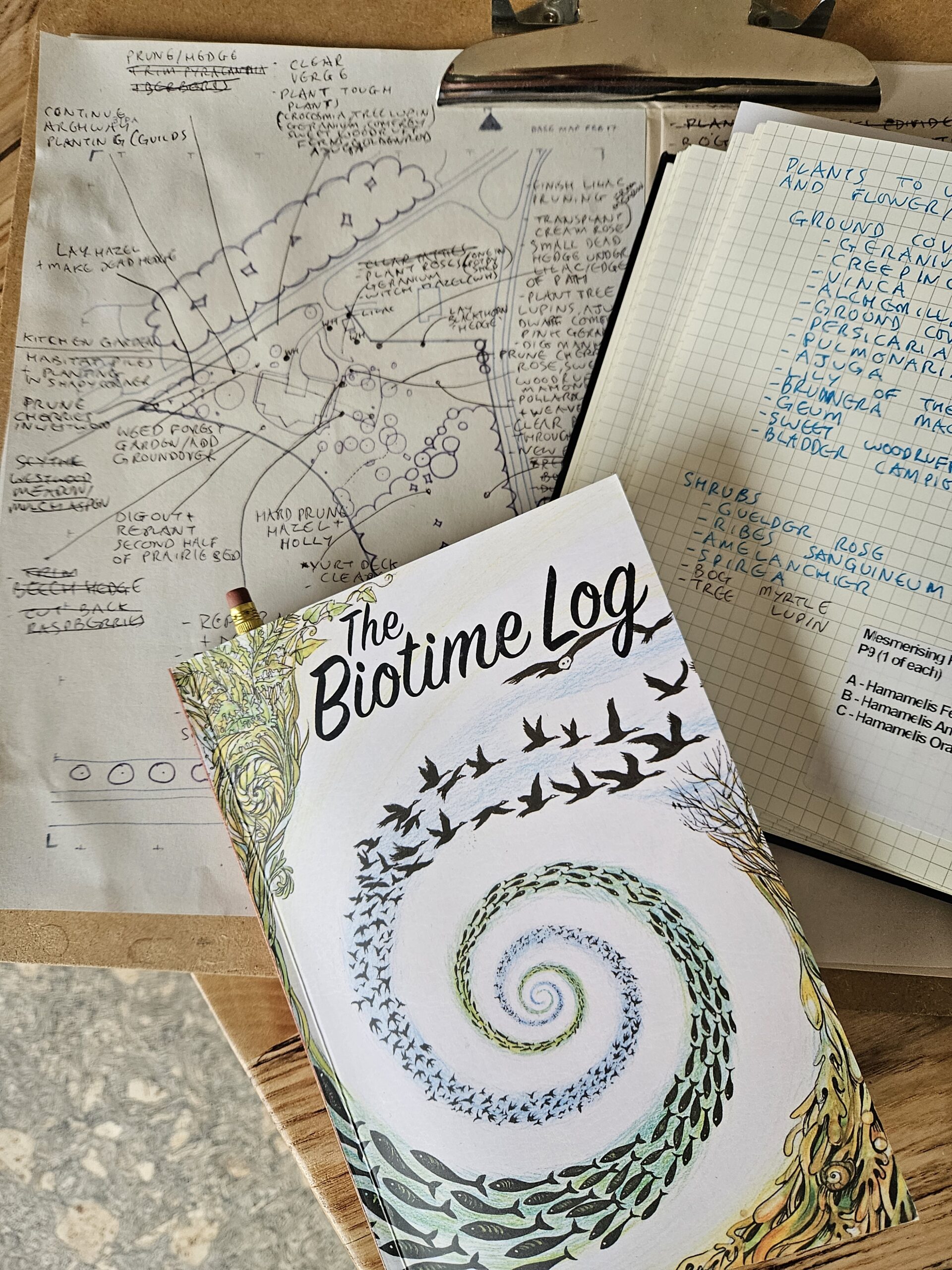
This layout shows our full 2.5 acre site as a mosaic of interconnected habitats and growing areas. We completed the original broadbrush design in 2017 and updated it in early 2022 to reflect how the site has evolved.
We followed David Jacke’s Ecological Design Process, as described in Edible Forest Gardens (Volume 2), to create a diverse, resilient landscape. While we treat the land as one living system, we’ve divided it into zones and areas, each with its own role and character.
ORCHARD FOREST GARDEN
This area lies on the north side of the site, sloping gently south in full sun.We designed it as part of our Zone 2 to grow fruit, herbs, greens, and flowers that nourish people, birds, insects, and soil life
We wanted to reduce lawn and maintenance time while increasing biodiversity, improving soil, and making a welcoming entrance. Inspired by forest garden principles, we planted layers of dwarf fruit trees, shrubs, herbs, groundcovers, and soil enhancing species.
There are apple and plum trees underplanted with guilds of gooseberries, currants, sea buckthorn, serviceberry, juneberry, szechuan pepper, tree lupin and more. Beneath these grow apple mint, lemon balm, calendula, bergamot, clary sage, horseradish, echinacea, sweet cicely, yarrow, sweet violet, comfrey, hyssop, salad burnet, crimson clover, daffodil, honeysuckle and everlasting sweet pea.
We establish the beds with cardboard and woodchip, and mow grass paths between them. This productive and colourful space evolves with each season, always teaching us something new.


KITCHEN GARDENS
The kitchen gardens lie in Zone 1, just outside the kitchen, sunroom, and dining room doors. They face south east on gentle grassy slopes. When we moved in, this area was all lawn. Over time, we improved the compacted soil by mulching, creating raised beds, pathways, sheet mulch beds, hugel beds, and brash fences to enclose sections.
We fenced off the gardens to protect crops from rabbits and deer. Our kitchen gardens feature diverse polycultures of annual and perennial vegetables, salads, herbs, and plants that attract pollinators and support natural pest control. This provides fresh, plant based food throughout the year.


In raised beds and the polytunnel, we grow a wide range of crops. We mainly grow annual and perennial vegetables and salads in this space, for example Lettuce, Rocket, Peas, Beans, Chard, Kale and Tomatoes. We’ve taken inspiration from traditional cottage and potager-style kitchen gardens to shape this space.
Coniferous Forest Garden
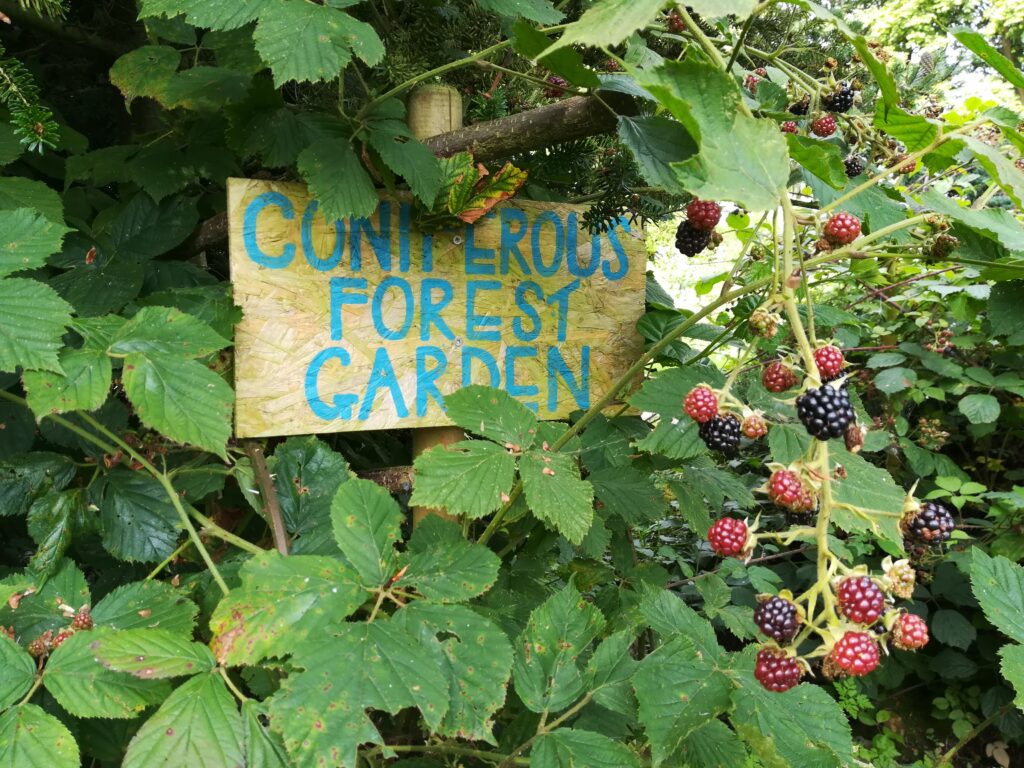
Located near the entrance in Zone 2, this shady bed is planted with fir, pine, spruce, juniper, hebe, honeysuckle, broom, and foxgloves. It became a surprising foraging space for brambles and inspired us to mimic local bog woodland where blaeberries thrive under conifers.
We added blaeberries, crowberries, and more brambles, pruned the lower branches, and left the rest mostly untouched. The result is a low effort, low maintenance forage zone. We also introduced beech logs inoculated with shiitake spores, which now fruit beautifully

SOUTH TERRACES
The sunny patios and rear slopes of the house serve as spaces for relaxing, dining, and growing. Hugel beds and flower borders provide culinary and tea herbs, nectary plants for pollinators, and seasonal cut flowers. Hugel beds and sunny borders are full of thyme, hyssop, chives, foxglove, lupins, clary sage, sweet peas, calendula, echinacea and geranium. Nearby hedging includes beech, hawthorn, elder, hazel and tree lupin.


EAST MEADOW AND NECTARY GARDEN
The meadow lies on the eastern side of the land, bordered by the road and a neighbour’s garden. At first, we originally considered it for vegetables or a polytunnel. But after observing the space, we chose to preserve its wild character. Rich in raspberries, rosebay willowherb, brambles and teasel, it hums with insect and bird life.
We now manage it lightly—removing saplings and encouraging native wildflowers. Pollard willows provide material for weaving and fencing. Bees and butterflies love it here, and so do we.

BOG GARDEN AND PONDS
The bog garden and ponds are on the eastern side of the plot in the woodland (Zone 4). On naturally boggy woodland ground, we dug a pond in the clay. We then planted native marginal plants including iris, cuckoo flower, meadowsweet, hemp agrimony and bog bean. A burn now trickles through this area, crossed by a little wooden bridge and boardwalk. This zone offers refuge for frogs, newts, toads, and insects.


MEADOW
Below the house, this open grassy area slopes toward the woodland. We let the grasses grow long and cut them twice a year for hay or mulch. A few trees such as rowan, blue fir, and twisted hazel, give structure, and winding paths lead to a firepit and benches. Wildflowers like marsh orchid, clover, yarrow, and knapweed bloom freely. Under the holly tree, we created a stumpery for ferns and shade plants, while sunnier areas are filled with naturalising spring bulbs.


WOODLAND AND ECO CABINS
The woodland stretches across the southern edge of the site and is home to native trees like alder, lime, beech, willow, sycamore, ash, birch, hawthorn and holly. Ferns, brambles, foxgloves, snowdrops and bluebells thrive under their canopy. The area is carefully managed to protect biodiversity and prevent trampling, with clear paths winding through.
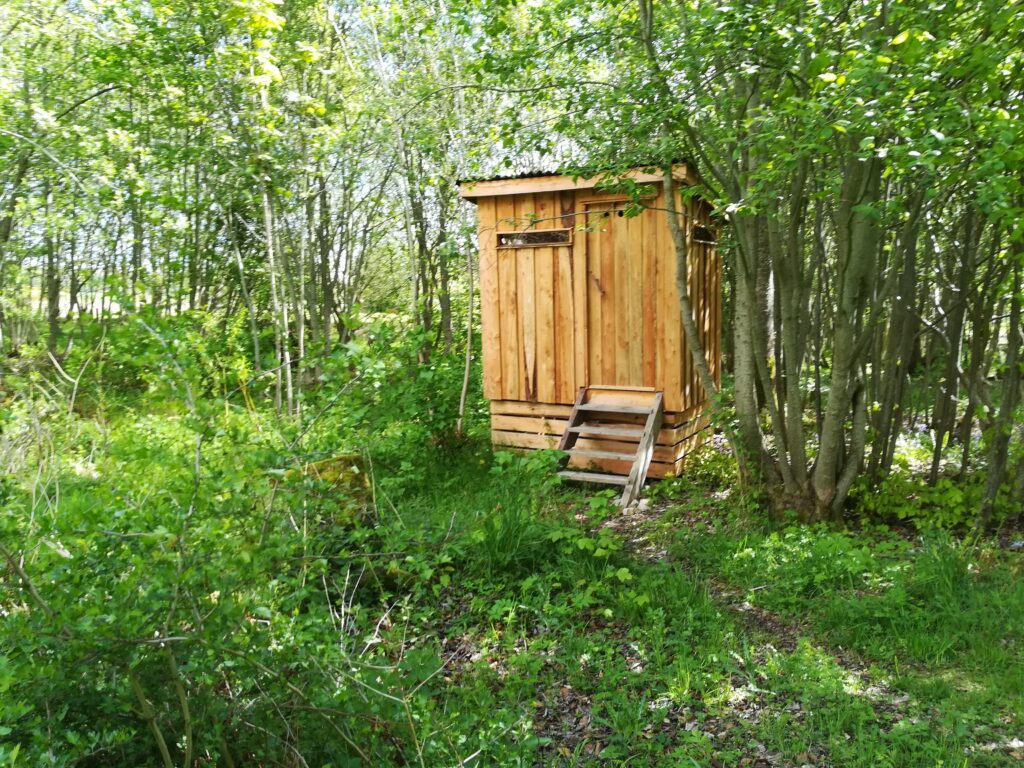
Our two off grid eco cabins sit lightly among the trees. We designed and built them to preserve the woodland’s character and avoid removing trees, offering guests a way to stay close to nature.


SYSTEMS AND CYCLES
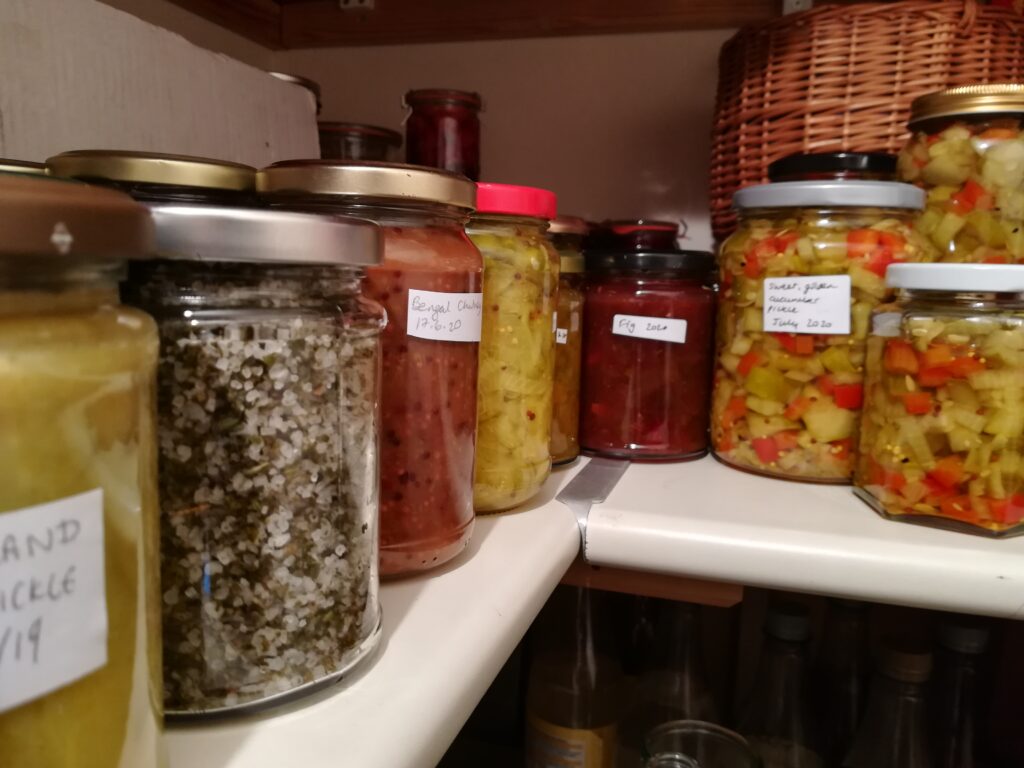
Alongside the physical layout of the Warren Forest Garden, our design focuses on creating closed-loop systems and cycles. Grass clippings, weeds and prunings feed compost heaps. Food scraps go to the wormeries, which produce compost and liquid feed. Meadows are scythed, and the hay becomes mulch or a potato bed, before being composted again. We preserve seasonal harvests by freezing, drying, fermenting and canning.

ECO HOUSE RETROFIT
We transformed the existing bungalow with an ‘Ugly House to Eco House’ retrofit. By integrating solar hot water, solar PV, and a biomass heating system, we boosted energy efficiency and comfort. We used natural materials, eco-friendly flooring and paints, and focused on thoughtful aesthetic design. Our design draws on Japanese and Scandinavian minimalism, enriched by Arts and Crafts values and Modernist simplicity. The result is a warm, practical, and environmentally conscious home. This has been achieved within the constraints of our budget and the original structure.
ENERGY
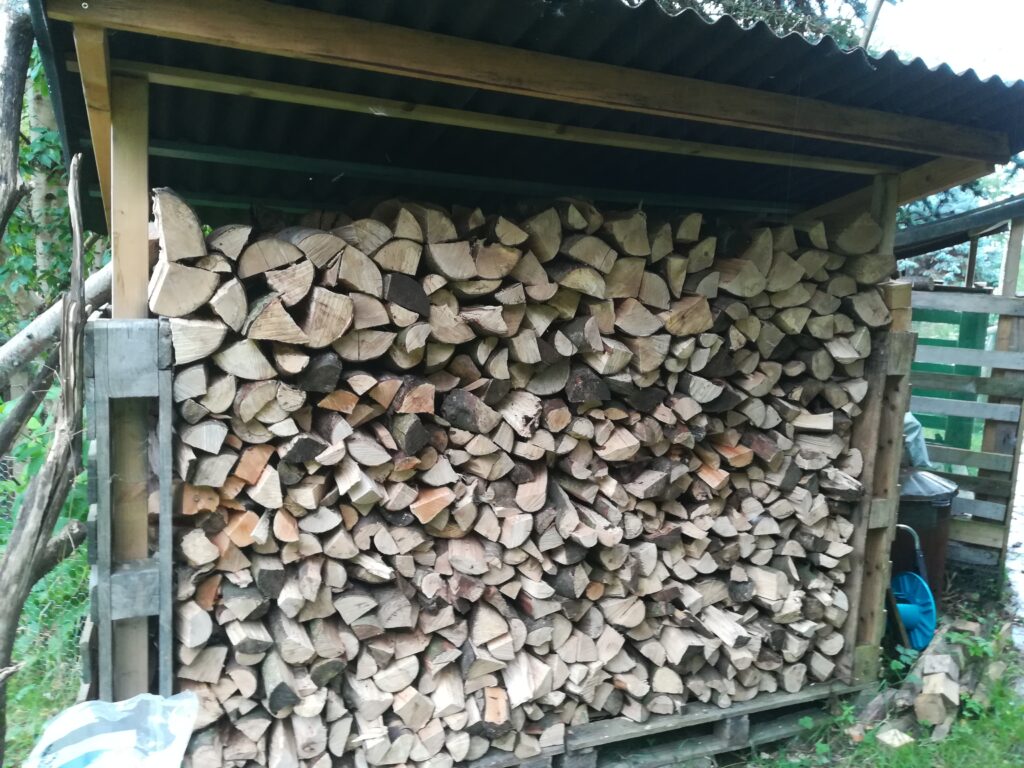
We produce all our firewood and kindling from our small woodland and generate some of our electricity with solar panels (and use a renewable supplier for the remainder). We reduce our energy use wherever possible—using hand tools, scythes and low energy appliances. Even our lawn mower runs on rechargeable batteries instead of fossil fuels.